
If you are searching for Tata Starbus Fuel Cell Bus Price in India 2026, then you are not an ordinary bus owner or driver. You are either thinking about future transport technology, government tenders, city bus operations, or you have been told that hydrogen fuel cell buses are the “next big thing” after electric buses.
I want you to read this article slowly. Not with excitement, but with understanding.
Fuel cell buses are being talked about loudly, but very few people explain what actually happens after the bus starts running on Indian roads. I have seen diesel buses, CNG buses, electric buses, and now fuel cell pilots. Every technology looks perfect on paper. Reality starts after the first six months.
This article is written like a senior transporter explaining things honestly to a junior—what works, what fails, and what nobody wants to say.
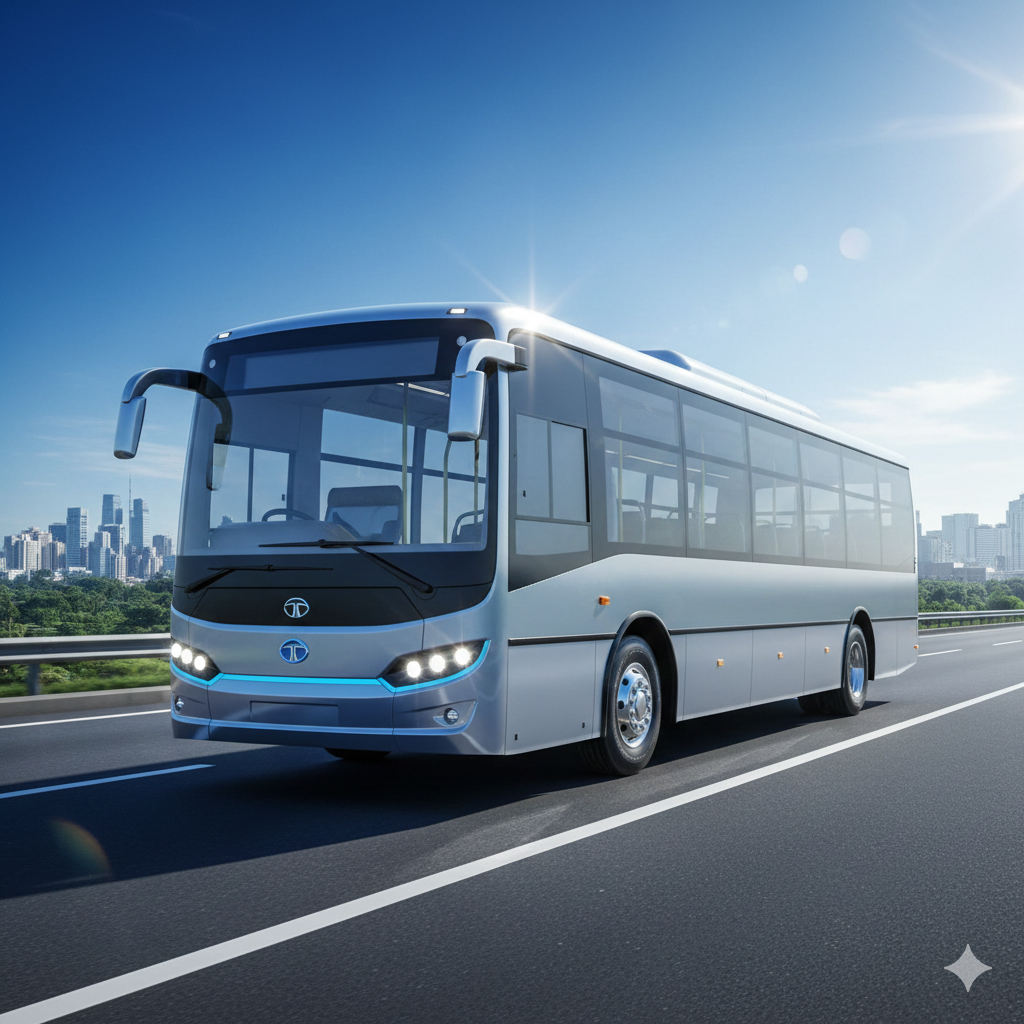
What Is Tata Starbus Fuel Cell Bus Price in India 2026 – In Simple Words
The Tata Starbus Fuel Cell Bus is a hydrogen-powered city bus. It does not burn diesel, it does not run on CNG, and it does not depend fully on large battery charging like electric buses.
Instead, it uses:
-
Hydrogen fuel
-
A fuel cell stack that generates electricity
-
A small buffer battery
-
Electric motors for drive
In short, it is an electric bus that generates electricity onboard using hydrogen.
Sounds perfect. Zero emissions. Silent running. Long range.
Now let us move to reality.
Tata Starbus Fuel Cell Price in India (2026) – Expected Ground Reality
This is the biggest question and the biggest confusion.
Tata Starbus Fuel Cell Price in India (2026 – Expected)
| Cost Component | Estimated Amount (₹) |
|---|---|
| Base bus cost | 2.6 – 2.8 crore |
| Fuel cell system | Included |
| Registration & permits | 6 – 10 lakh |
| Insurance | 5 – 7 lakh |
| Infrastructure linkage | Project dependent |
| Tata Starbus Fuel Cell price in India (2026) | 2.7 – 3 crore |
Let me be direct.
This bus is not designed for private small operators at this price. Anyone telling you otherwise is selling dreams, not buses.
The First Big Misunderstanding About Fuel Cell Buses
People say:
-
“Fuel cell is cheaper than electric”
-
“Hydrogen is unlimited”
-
“Running cost will be almost nothing”
All three statements are misleading without context.
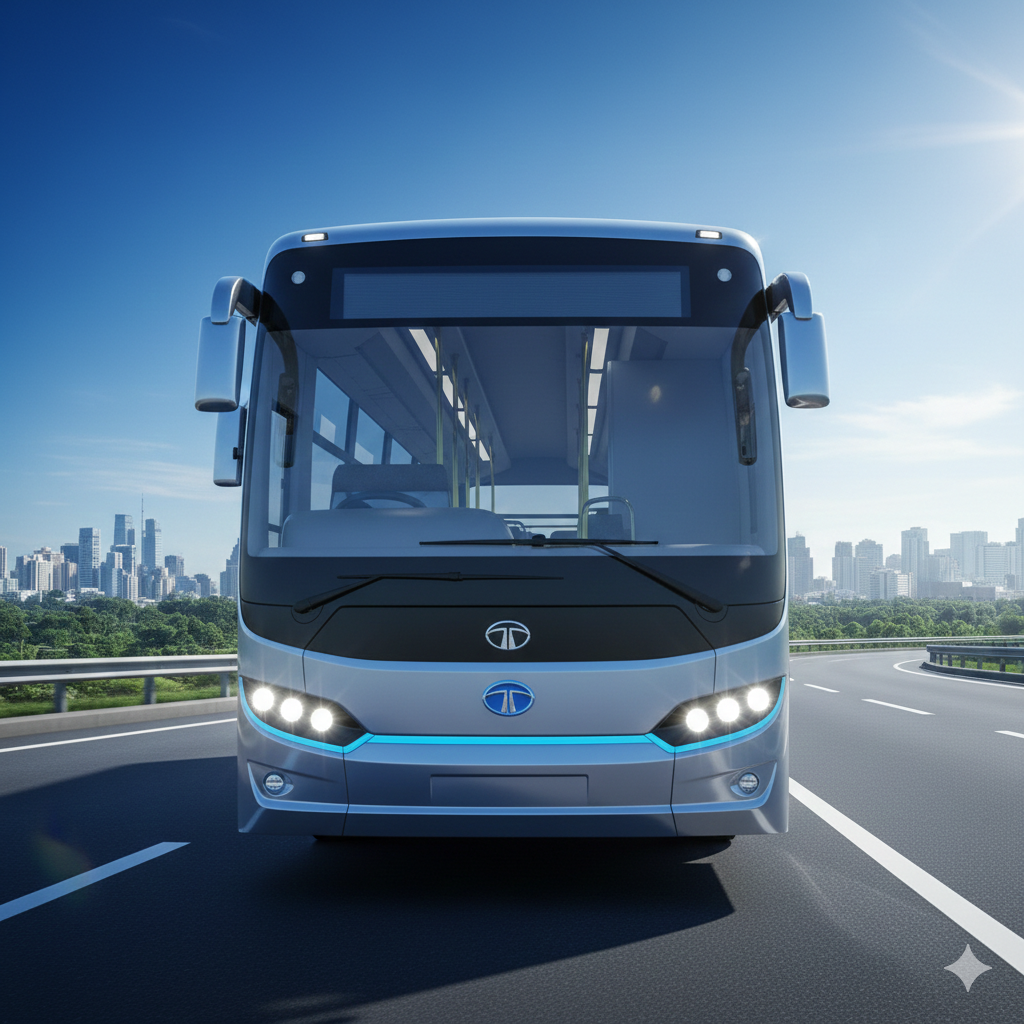
Fuel cell buses are:
-
Technologically advanced
-
Environment-friendly
-
Extremely infrastructure dependent
Profit depends less on the bus and more on who controls the ecosystem.
Running Cost Reality – Hydrogen vs Diesel vs Electric
Let us compare honestly.
Diesel City Bus
Mileage: 3–4 km/l
Diesel price: ₹90/litre
Cost per km: ₹22–30
Electric City Bus
Cost per km: ₹8–10
Charging dependency: High
Downtime risk: Medium
Tata Starbus Fuel Cell Bus
-
Hydrogen consumption cost (current scenario): Very high
-
Estimated cost per km (2026 pilot): ₹18–22
-
Depends heavily on hydrogen availability and pricing
So no, fuel cell is not cheaper than electric today.
That is the truth.
The Infrastructure Reality Nobody Talks About
A diesel bus needs:
-
Diesel pump
An electric bus needs:
-
Charger and electricity
A fuel cell bus needs:
-
Hydrogen production
-
Hydrogen storage
-
High-pressure refueling stations
-
Safety clearances
-
Trained technicians
If your city does not have dedicated hydrogen infrastructure, the Tata Starbus Fuel Cell price in India (2026) becomes irrelevant, because the bus cannot operate independently.
Maintenance Reality – Lower Wear, Higher Skill Dependency
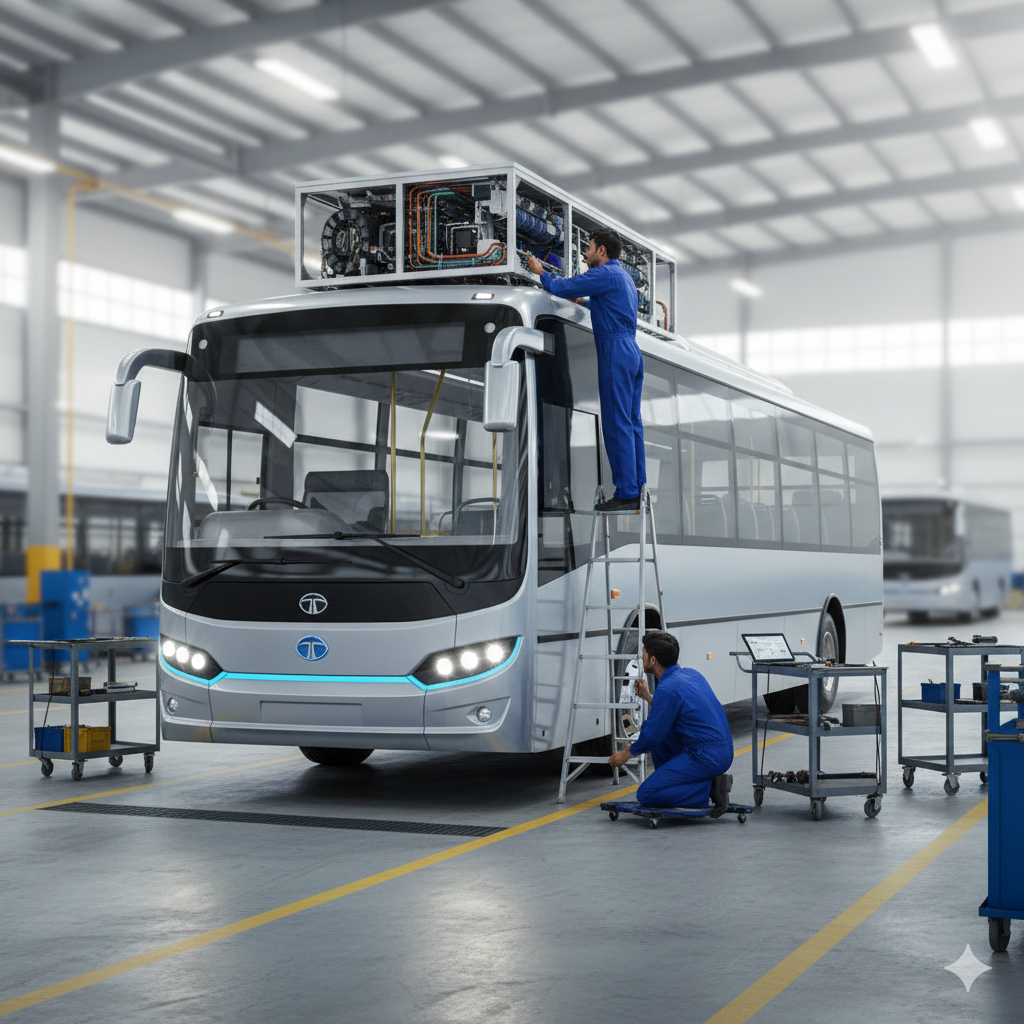
Fuel cell buses have:
-
Fewer moving engine parts
-
Less vibration
-
Better cabin comfort
But:
-
Fuel cell stack maintenance requires specialists
-
Sensors and safety systems are sensitive
-
Repairs cannot be done roadside
A small failure can stop the bus for days.
For government fleets, this is manageable.
For small private operators, this is dangerous.
Driver Training & Operational Reality

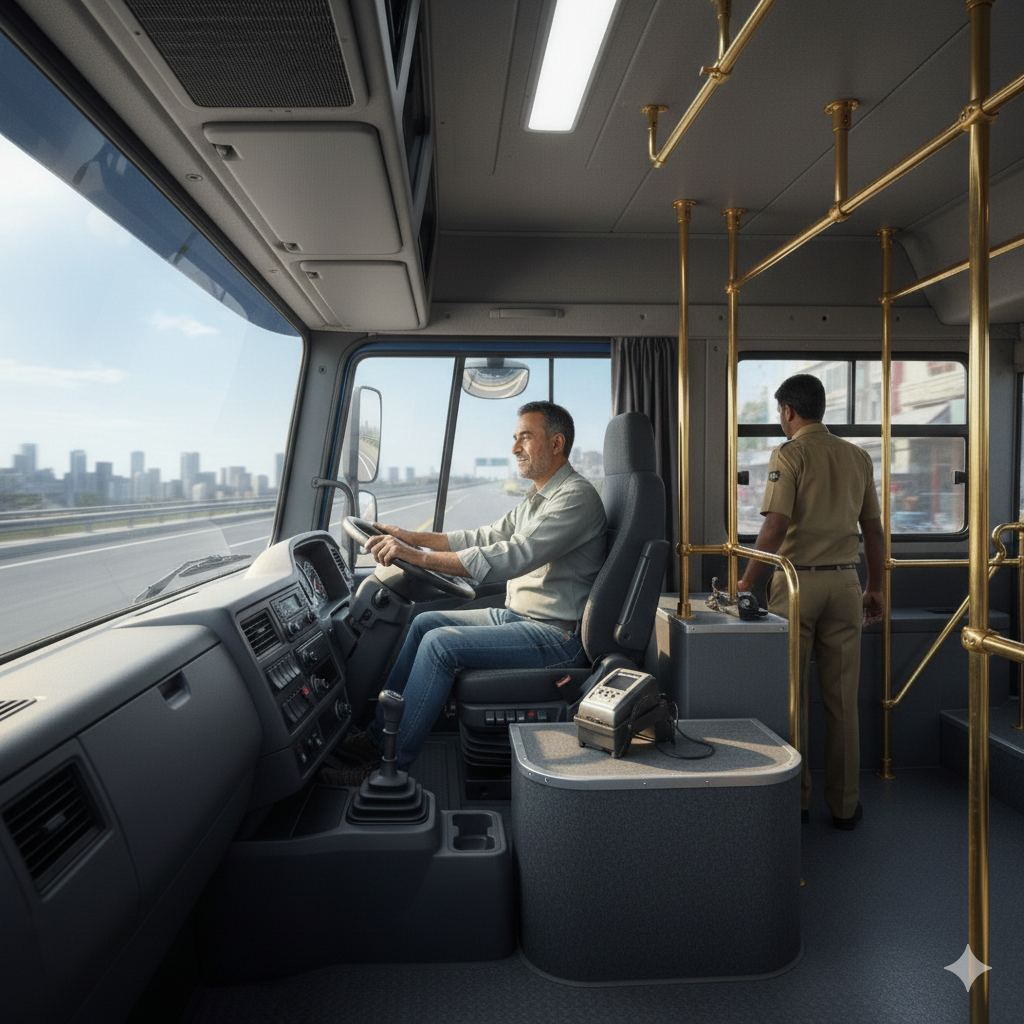
Drivers love driving these buses:
-
Silent
-
Smooth acceleration
-
No gear shifting stress
But problems arise when:
-
Drivers are not trained for hydrogen safety
-
Emergency handling knowledge is missing
-
Technology troubleshooting is weak
A bus is only as reliable as the ecosystem supporting it.
Indian Road Conditions vs Fuel Cell Technology
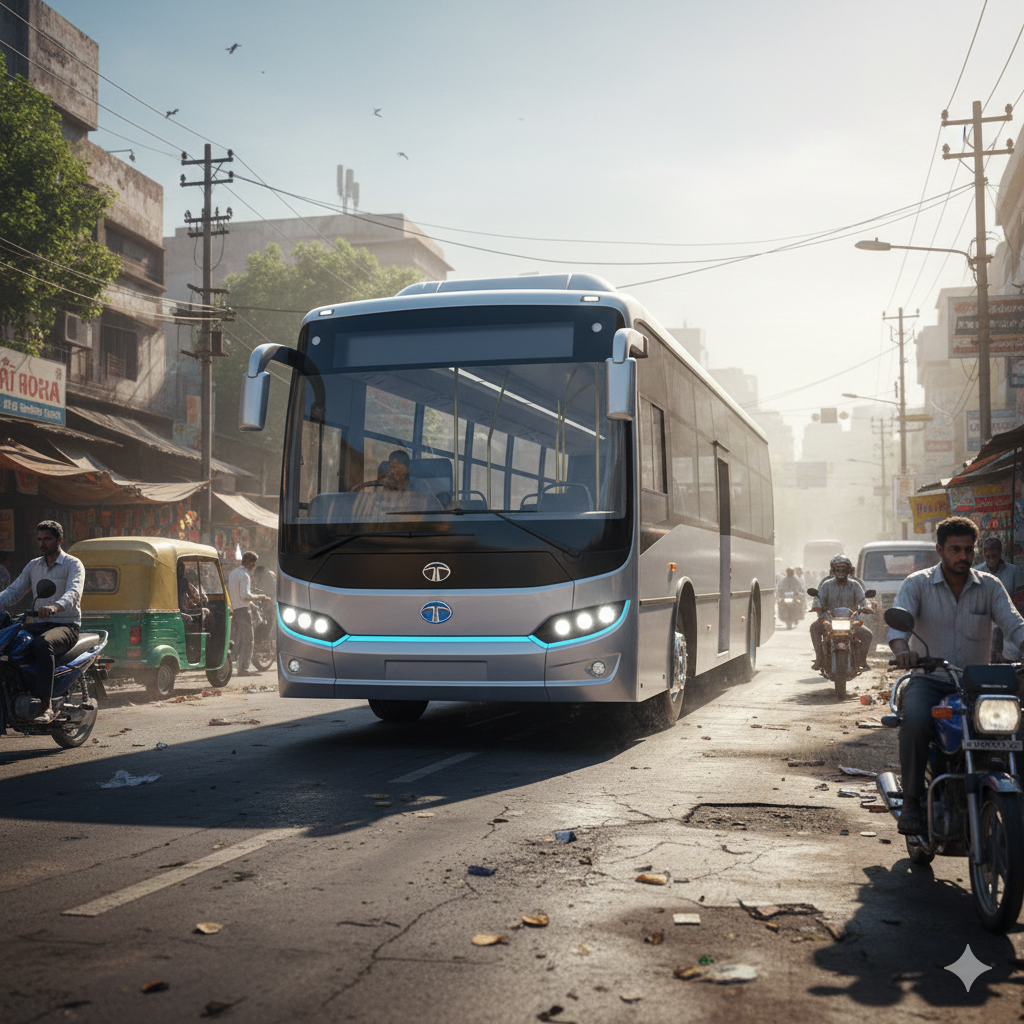
Fuel cell buses perform best in:
-
Planned BRT corridors
-
Smooth urban roads
-
Fixed routes
-
Government-monitored depots
Problems start with:
-
Broken city roads
-
Flood-prone areas
-
Poor depot discipline
-
Unplanned route diversions
Technology cannot fix poor infrastructure overnight.
The Biggest Lie Being Told in the Market
“Fuel cell buses will replace diesel and electric buses very soon.”
This is completely false.
Fuel cell buses are:
-
Pilot-stage for India
-
Policy-driven
-
Subsidy-dependent
-
Suitable mainly for public transport PSUs
At least till 2030, this will not be a mass-market solution.
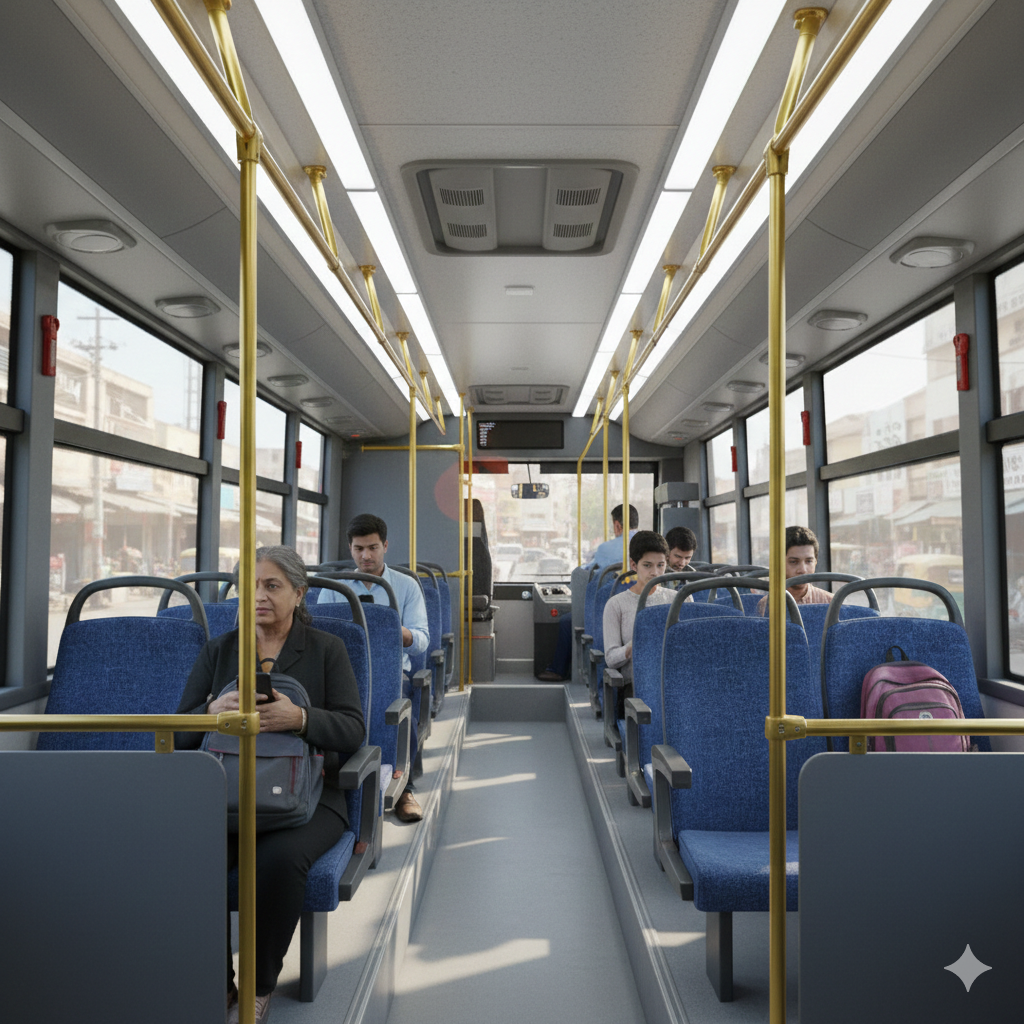
Real-Life Scenario Example
City Transport Undertaking (Pilot Project)
Central government funding
Dedicated hydrogen station
Trained engineers
Fixed daily routes
Result:
Controlled operation
Data generation
No profit pressure
Private Operator Without Support
-
No hydrogen station access
-
High downtime risk
-
No resale clarity
Result:
-
Financial risk
-
Operational stress
Same bus. Completely different outcome.
RTO, Permit, and Legal Reality
-
Special approvals required
-
Safety audits mandatory
-
Emergency response protocols enforced
-
Not every RTO office understands fuel cell norms yet
This creates delays and confusion during early adoption.
Who Should Even Think About Tata Starbus Fuel Cell Bus
You should consider it ONLY if:
You are part of a government tender
You operate under PSU or STU
Hydrogen infrastructure is guaranteed
Profit is not the short-term objective
For everyone else, patience is smarter than excitement.
Frequently Asked Questions (FAQs)
1. What is Tata Starbus Fuel Cell price in India (2026)?
Expected between ₹2.7 to ₹3 crore depending on project structure.
2. Is this bus suitable for private operators?
Not at current cost and infrastructure stage.
3. Is hydrogen cheaper than diesel?
Not in India at present scale.
4. How much range does it offer?
Higher than electric buses, ideal for full-day city operation.
5. Is maintenance cheaper than diesel?
Mechanical wear is lower, but technical dependency is higher.
6. Can it replace electric buses soon?
No. It will coexist, not replace.
7. Is safety a concern?
Technology is safe, but training and infrastructure discipline are critical.
8. Is resale value predictable?
Too early to judge. Market has not matured.

Final Advice – Straight From Real Experience
Let me end this honestly, without drama.
-
Tata Starbus Fuel Cell price in India (2026) is policy-driven, not market-driven
-
This bus is a technology demonstration, not a profit machine
-
Diesel still rules long range
-
Electric dominates near-term city economics
-
Fuel cell is a future solution under controlled conditions
If you are a private bus owner looking for stability and income—this is not your bus yet.
If you are part of public transport planning, research, or government pilots—this bus makes sense.
The future will not belong to one technology.
It will belong to operators who choose the right tool at the right time.