Introduction to Tata Starbus EV 4/12 Low Entry Electric Bus
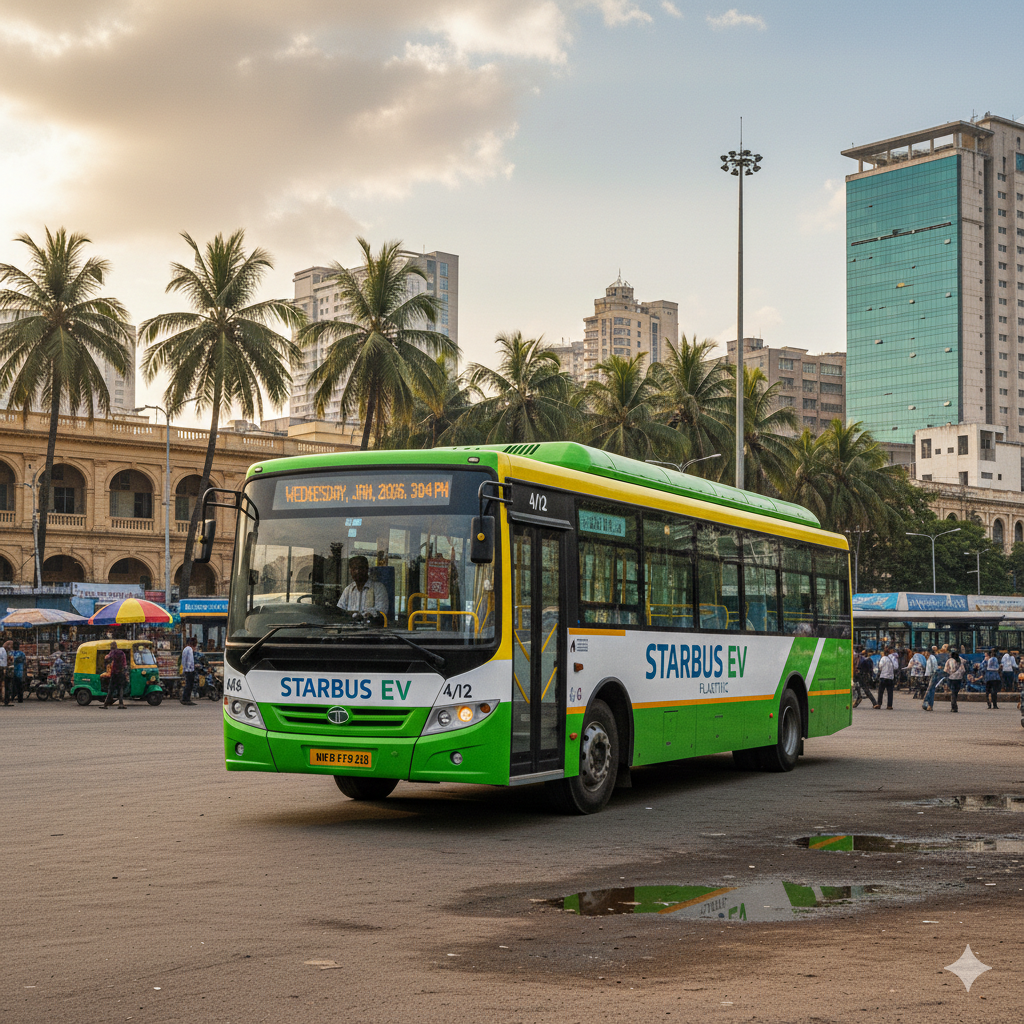
Urban transport is changing fast across India.Therefore, electric buses now lead public mobility upgrades.
The Tata Starbus EV 4/12 low entry electric bus stands out clearly.It combines proven Tata reliability with modern electric performance.
Moreover, it targets city operators focused on efficiency and comfort.This guide covers features, costs, benefits, and ownership realities.
Everything shared here stays factual, practical, and field-relevant.
What Makes the Tata Starbus EV 4/12 Special
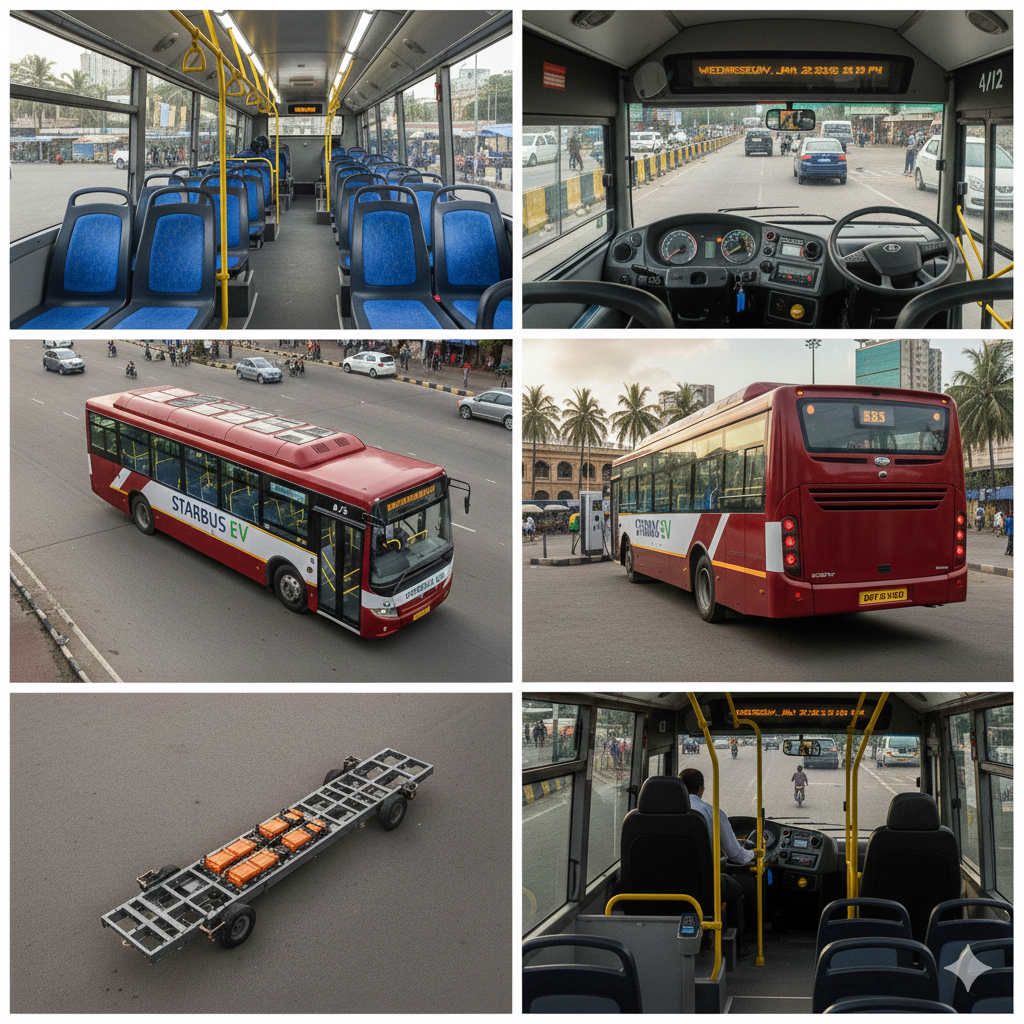
This bus uses a low-entry design for quick boarding.Consequently, accessibility improves for seniors and disabled passengers.
The 12-meter platform suits dense city routes perfectly.Additionally, the electric drivetrain reduces noise dramatically.Passengers enjoy smoother acceleration and quieter rides.Operators benefit from predictable running costs.Overall, the design balances city demands with sustainability goals.
Battery, Range, and Charging Performance
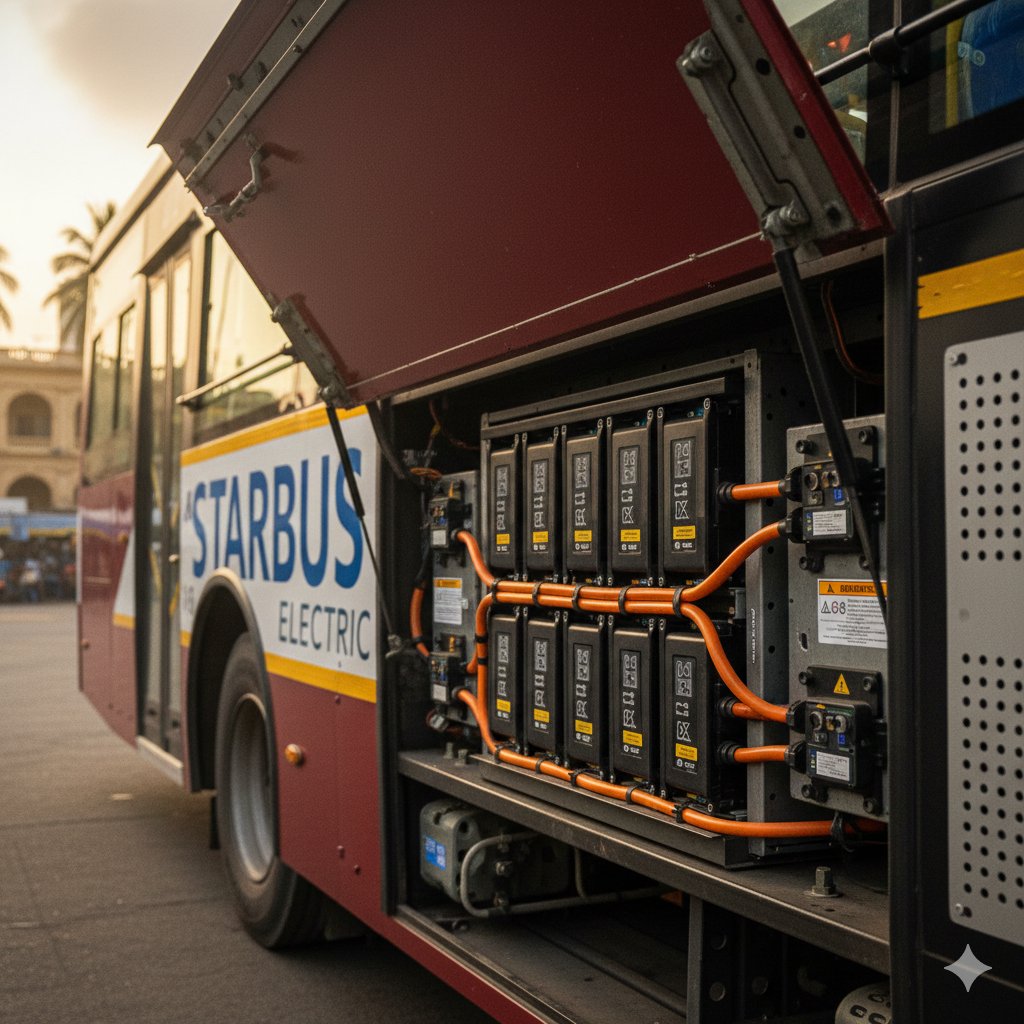
The bus features a robust lithium-ion battery pack.Therefore, it supports daily urban duty cycles reliably.Real-world range suits full-day city operations with planning.Fast charging options reduce depot downtime significantly.
Moreover, regenerative braking improves energy efficiency in traffic.Thermal management protects battery health in Indian climates.
Hence, lifecycle performance remains consistent over years
Interior Comfort and Passenger Experience
The low floor enhances step-free entry across doors.Thus, passenger flow remains smooth during peak hours.Spacious interiors support standing passengers comfortably.Air suspension improves ride quality on uneven roads.
Additionally, air-conditioning options enhance summer comfort.Digital displays support route and stop information.
Safety rails and wide aisles improve onboard movement.
Driver Cabin and Operational Ergonomics
Drivers get a well-designed, ergonomic cockpit.
Therefore, fatigue reduces on long city shifts.
The digital instrument cluster offers real-time vehicle data.
Steering remains light, which suits narrow streets.
Advanced braking assistance improves control in traffic.
Moreover, visibility stays excellent with wide windshields.
These features support safer and calmer driving.
Build Quality and Chassis Reliability
Tata uses a proven bus chassis platform.
Thus, durability matches demanding public transport standards.
The body structure supports heavy daily usage.
Corrosion protection suits humid and coastal cities.
Suspension components handle potholes reliably.
Meanwhile, localized manufacturing ensures parts availability.
This reliability reduces unexpected maintenance events.
Pricing and Financial Details
Below is a transparent pricing overview for India.
Cost Component | Estimated Value |
Ex-Showroom Price | ₹1.6–2.0 Crore |
Battery Included | Yes |
Charging Infrastructure | Extra, site-specific |
FAME II Subsidy | As per eligibility |
State Incentives | Varies by state |
Operating Cost per km | Significantly lower than diesel |
Prices vary by configuration and incentives.
However, total cost of ownership remains attractive.
Electric savings offset higher upfront prices steadily.
Why You Should Choose This Electric Bus
First, zero tailpipe emissions improve city air quality.
Second, electricity costs stay lower than diesel expenses.
Third, maintenance needs reduce due to fewer moving parts.
Additionally, passenger comfort increases ridership satisfaction.
Government incentives further strengthen the business case.
Moreover, Tata’s service network supports nationwide operations.
These factors make adoption financially and socially sensible.
Pros and Cons Overview
Pros
- Zero emissions and silent operation
- Low operating and maintenance costs
- Accessible low-entry design
- Strong Tata service ecosystem
- Modern safety and comfort features
Cons
- Higher initial purchase price
- Charging infrastructure planning required
- Route planning needed for optimal range
Despite limitations, benefits outweigh constraints for cities.
Real-World Use Cases in Indian Cities
City corporations already deploy this bus model.
Therefore, results show improved punctuality and comfort.
Fuel savings contribute to budget optimization.
Noise reduction improves urban livability.
Public perception remains positive toward electric fleets.
Furthermore, data-driven scheduling boosts fleet efficiency.
Such deployments validate long-term suitability.
FAQs About Tata Starbus EV 4/12
What is the seating capacity?
Capacity depends on layout and regulations.
Is air-conditioning available?
Yes, AC variants are offered.
Does it support fast charging?
Yes, compatible with fast chargers.
Is it suitable for hilly routes?
Yes, torque delivery supports gradients well.
How long does the battery last?
Designed for several years with proper care.
My Honest Opinion and Verdict
The Tata Starbus EV 4/12 low entry electric bus fits modern urban needs.
It delivers comfort, savings, and environmental benefits together.
Therefore, city operators gain long-term value.
The upfront cost feels high initially.
However, operational savings recover investments steadily.
For smart cities, this Tata bus makes strategic sense.
I confidently recommend it for future-ready fleets.
Conclusion
Electric mobility defines the future of city transport.
Hence, choosing the right platform matters greatly.
The Tata Starbus EV 4/12 low entry electric bus delivers balanced performance.
It supports passengers, drivers, and operators equally.
With proper planning, returns remain strong.
Therefore, this bus stands as a wise transition choice.
Urban India clearly moves electric, and this bus leads confidently.