
Introduction:Why Everyone Is Talking About the Tata Magna Sleeper Bus
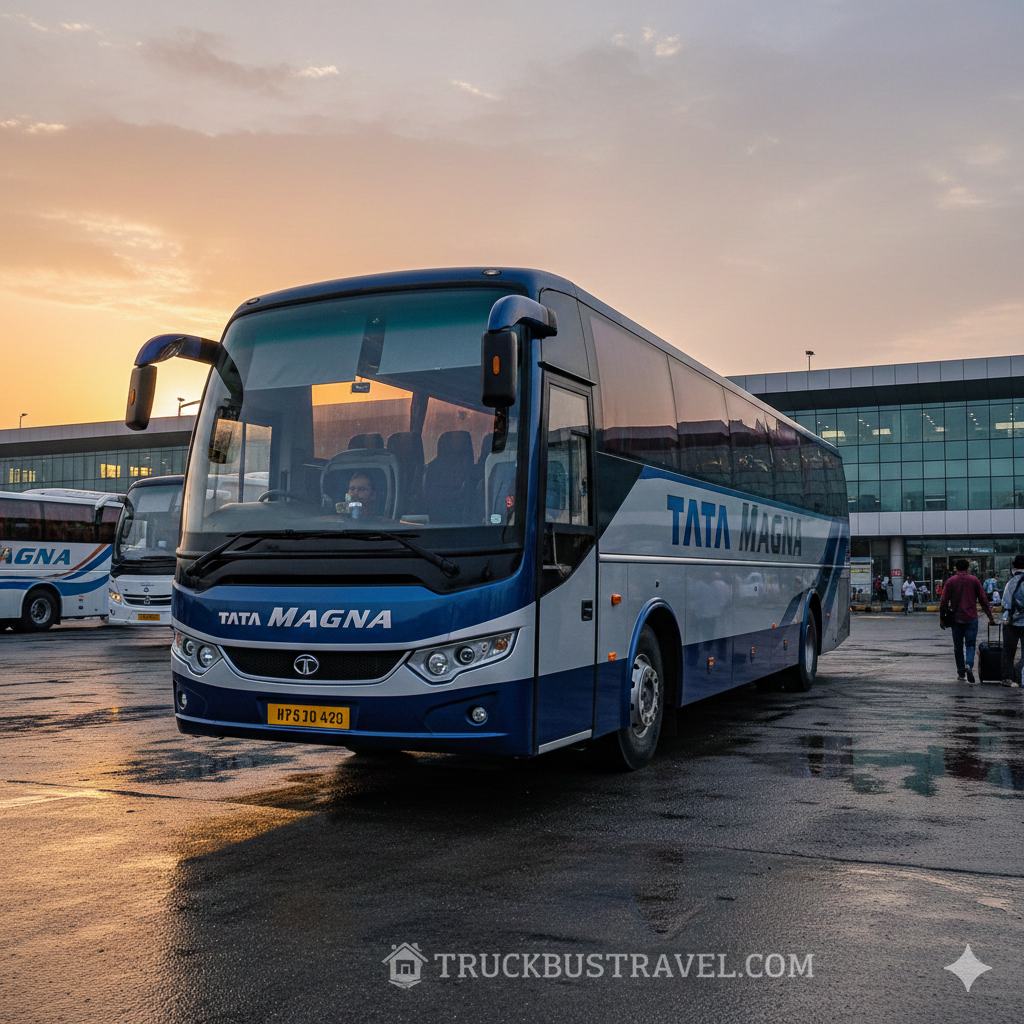
The Tata Magna Sleeper Bus has quietly become one of the most respected premium sleeper coaches in India’s intercity and interstate travel industry. Whether you talk to private bus operators, fleet owners, or passengers who regularly travel overnight, the same name keeps coming up again and again – Tata Magna Sleeper Bus.
What makes it special is not just the brand trust of Tata Motors, but the engineering philosophy behind this coach. It is designed for long-distance comfort, operational efficiency, lower fatigue for drivers, and better profitability for owners. Unlike many flashy sleeper buses that focus only on looks, Tata focused on balance – comfort, durability, mileage, maintenance, and resale value.
This blog is written for serious buyers, not casual readers. By the end of this guide, you’ll clearly know:
Whether the Tata Magna Sleeper Bus is worth buying
Who should buy it and who should not
Real advantages & hidden disadvantages
Running cost, finance options, and ROI logic
Passenger experience vs operator experience
If you are planning to invest crores in a sleeper bus business, this article can save you lakhs by helping you make the right decision.
What Exactly Is the Tata Magna Sleeper Bus?
The Tata Magna Sleeper Bus is a premium sleeper coach platform developed by Tata Motors, primarily used on overnight, long-haul routes such as:
-
Delhi – Jammu
-
Bangalore – Hyderabad
-
Mumbai – Goa
-
Chennai – Coimbatore
-
Ahmedabad – Pune
It is usually built on Tata’s high-performance bus chassis and completed by authorized body builders like MG, Prakash, Veera, or custom luxury builders.
What separates the Tata Magna Sleeper Bus from standard sleepers is its:
-
Stronger chassis balance
-
Better NVH (Noise, Vibration & Harshness) control
-
Optimized suspension for sleeping passengers
-
Long-term reliability on bad Indian roads
Design Philosophy: Built for Real Indian Long Routes
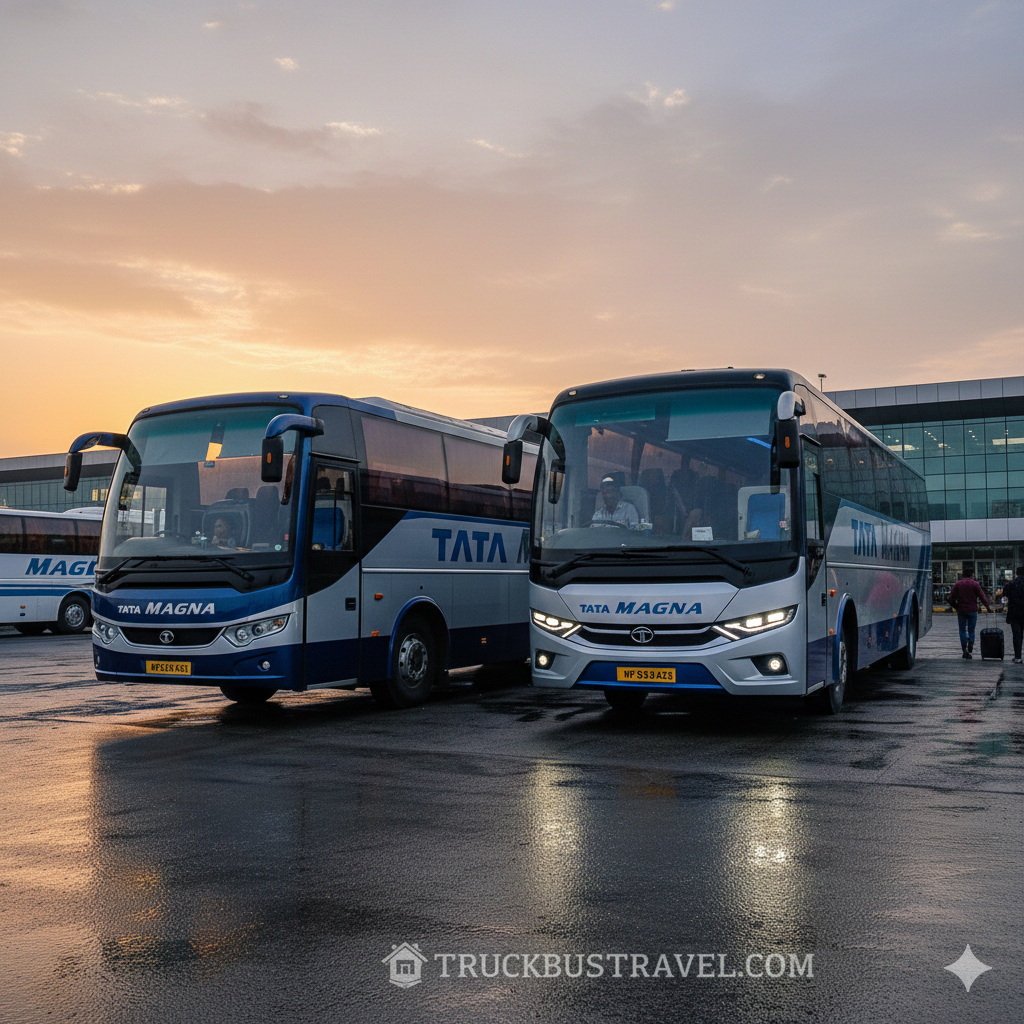
Many sleeper buses look luxurious but fail after 3–4 years due to poor structural design. The Tata Magna Sleeper Bus follows a commercial-first, comfort-second approach — which is exactly what fleet owners need.
Exterior Design
Tall, commanding road presence
Aerodynamically improved front fascia
Better airflow design = improved fuel efficiency
Clean body lines that age well over time
Interior Design (Sleeper Layout)
Wider berths for adult comfort
Proper ventilation per berth
Anti-slip flooring
Noise-insulated walls and roof panels
Premium lighting for night travel
Passengers often describe the Tata Magna Sleeper Bus as “less shaking, more sleeping”, which is the biggest compliment a sleeper bus can get.
Engine, Performance & Mileage Explained Simply
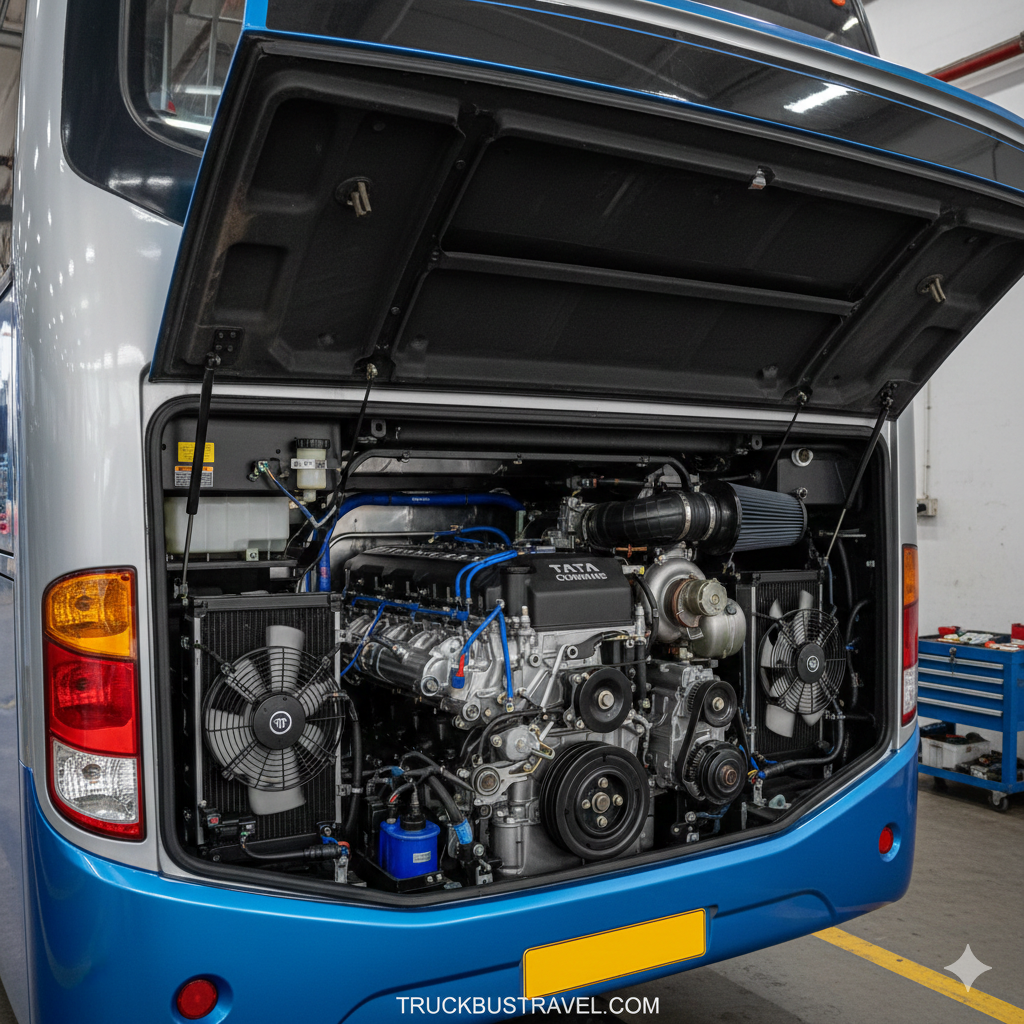
The Tata Magna Sleeper Bus is typically powered by Tata’s proven diesel engines, tuned for torque rather than speed.
Why Torque Matters in Sleeper Buses
Smooth gear shifts
Less jerking = better sleep
Stable performance on ghats & highways
Lower engine stress in full-load conditions
Real-World Mileage
Mileage depends on route, driving style, and load, but owners generally report:
4.5 – 5.5 km/l on highways
Slightly lower on hilly terrain
For a full-length luxury sleeper, this is considered very respectable and directly impacts profitability.
Ride Comfort & Suspension – A Silent Profit Maker
One underrated advantage of the Tata Magna Sleeper Bus is its suspension tuning.
Why does this matter?
Passengers who sleep well → repeat bookings
Less vibration → fewer complaints
Lower wear on body structure
The air-suspension variants especially make a huge difference on overnight routes. Over time, this results in:
Better ratings on booking platforms
Higher seat occupancy
Ability to charge premium fares
Safety Features: Confidence for Drivers & Owners
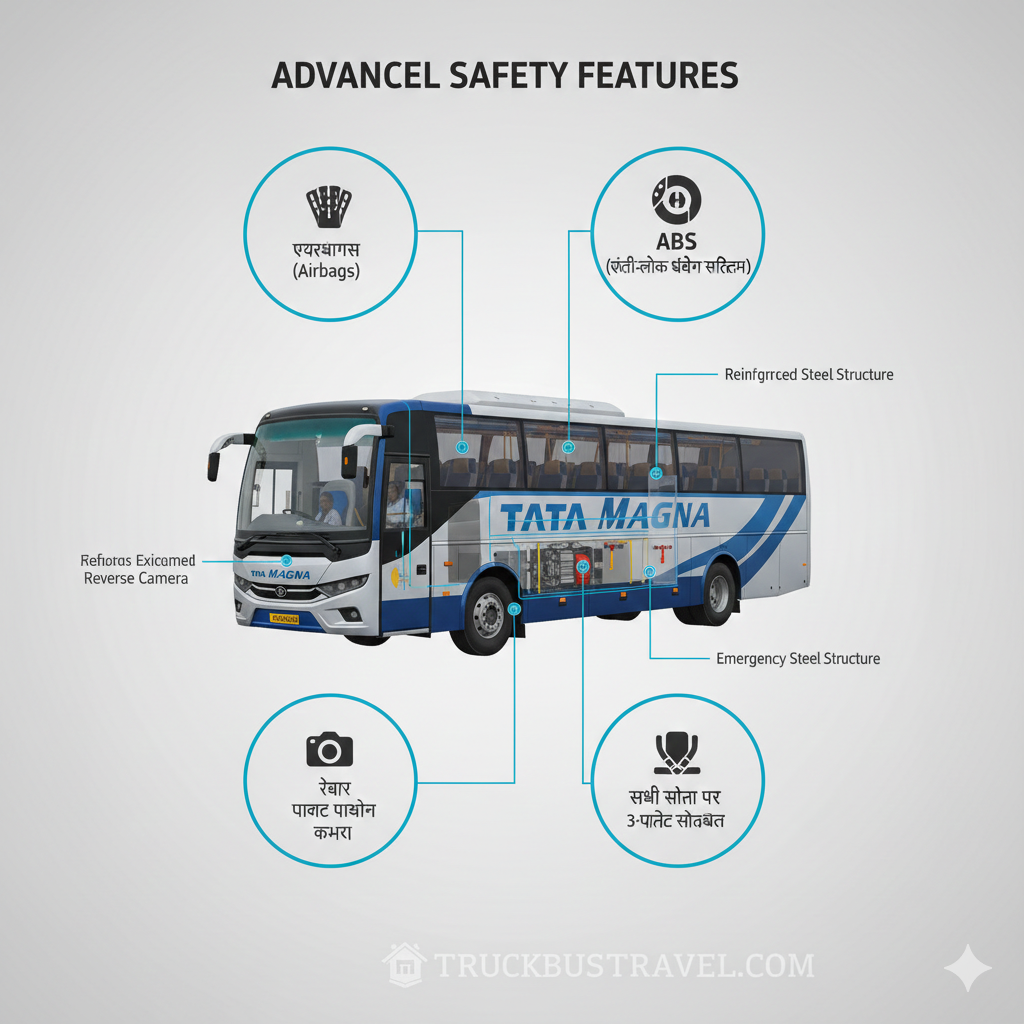
Safety isn’t just about regulations; it’s about peace of mind.
The Tata Magna Sleeper Bus platform supports:
Strong ladder-frame chassis
Better braking stability
High structural integrity
Optional ABS & safety systems
Better driver visibility and ergonomics
Drivers often prefer Tata chassis because it reduces fatigue, which indirectly improves safety on long night routes.
Price & Financial Details (Estimated)
Below is a realistic industry estimate. Prices vary based on body type, city, and customization.
| Item | Estimated Cost (INR) |
|---|---|
| Base Chassis Price | ₹28–32 lakh |
| Sleeper Body Build | ₹18–25 lakh |
| Total On-Road Price | ₹46–60 lakh |
| Down Payment (Typical) | ₹8–12 lakh |
| Loan Tenure | 5–7 years |
| EMI (Approx.) | ₹85,000 – ₹1.2 lakh |
📌 Tip: Many operators recover EMI comfortably by running 20–24 trips per month with 70–80% occupancy.
Operating Cost & Profitability Logic
Let’s talk business reality.
Monthly Expense Includes:
Diesel
Driver & helper salary
Maintenance
Toll & permits
EMI
Why the Tata Magna Sleeper Bus Makes Sense Financially:
Lower breakdown frequency
Easy spare availability
Strong service network
Excellent resale demand even after 6–8 years
Fleet owners often say:
“This bus doesn’t give sudden financial shocks.”
Pros and Cons of Tata Magna Sleeper Bus
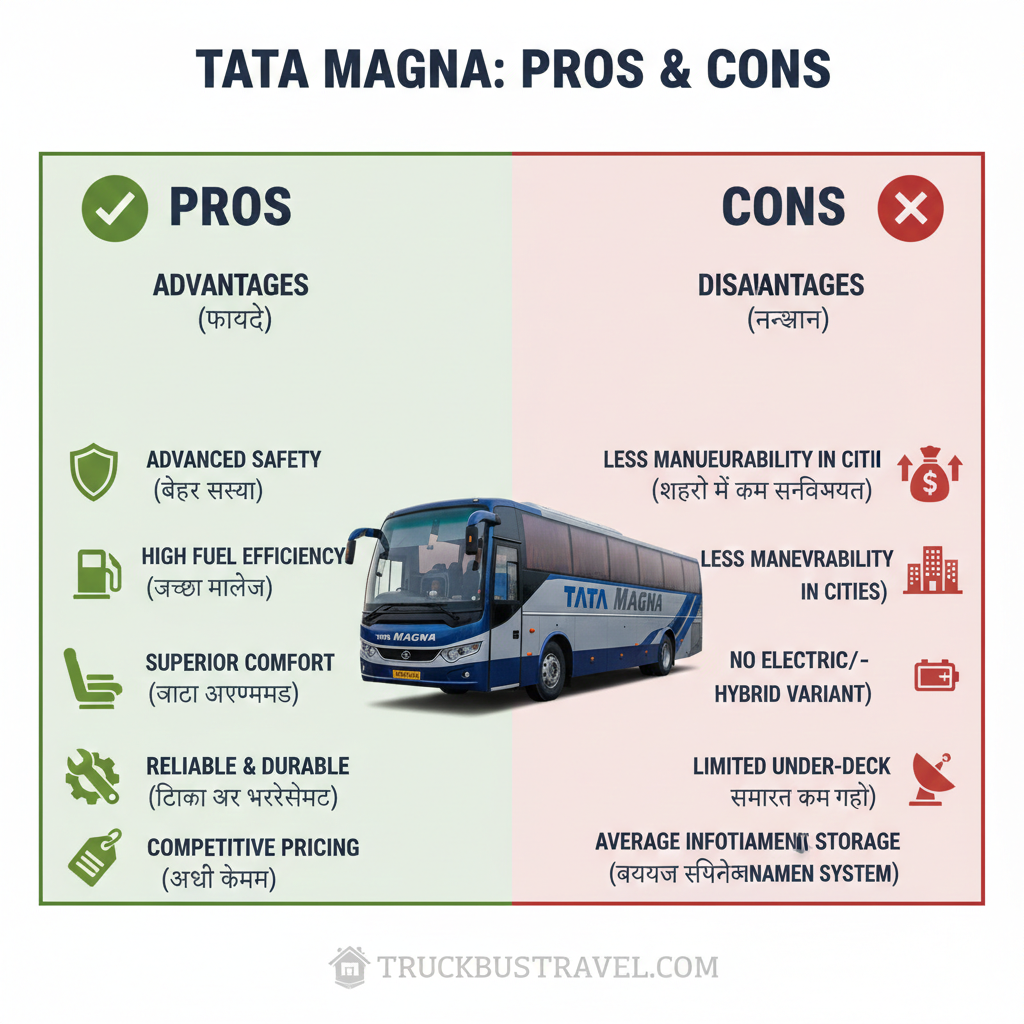
✅ Pros
Excellent long-distance comfort
Strong Tata reliability
Good mileage for sleeper segment
High resale value
Trusted by financiers
Good passenger feedback
❌ Cons
Higher initial investment
Luxury body maintenance cost
Not ideal for short routes
Profit depends on route planning
Truth: This bus rewards smart operators and punishes poor route selection
Who Should Buy the Tata Magna Sleeper Bus?
You should buy the Tata Magna Sleeper Bus if:
You run long overnight routes
You want repeat customers
You think long-term (5–10 years)
You value stability over flashy looks
You should avoid it if:
Your routes are under 300 km
You want quick short-term returns
You don’t want to manage sleeper operations carefully
Tata Magna Sleeper Bus vs Competitors (Quick Insight)
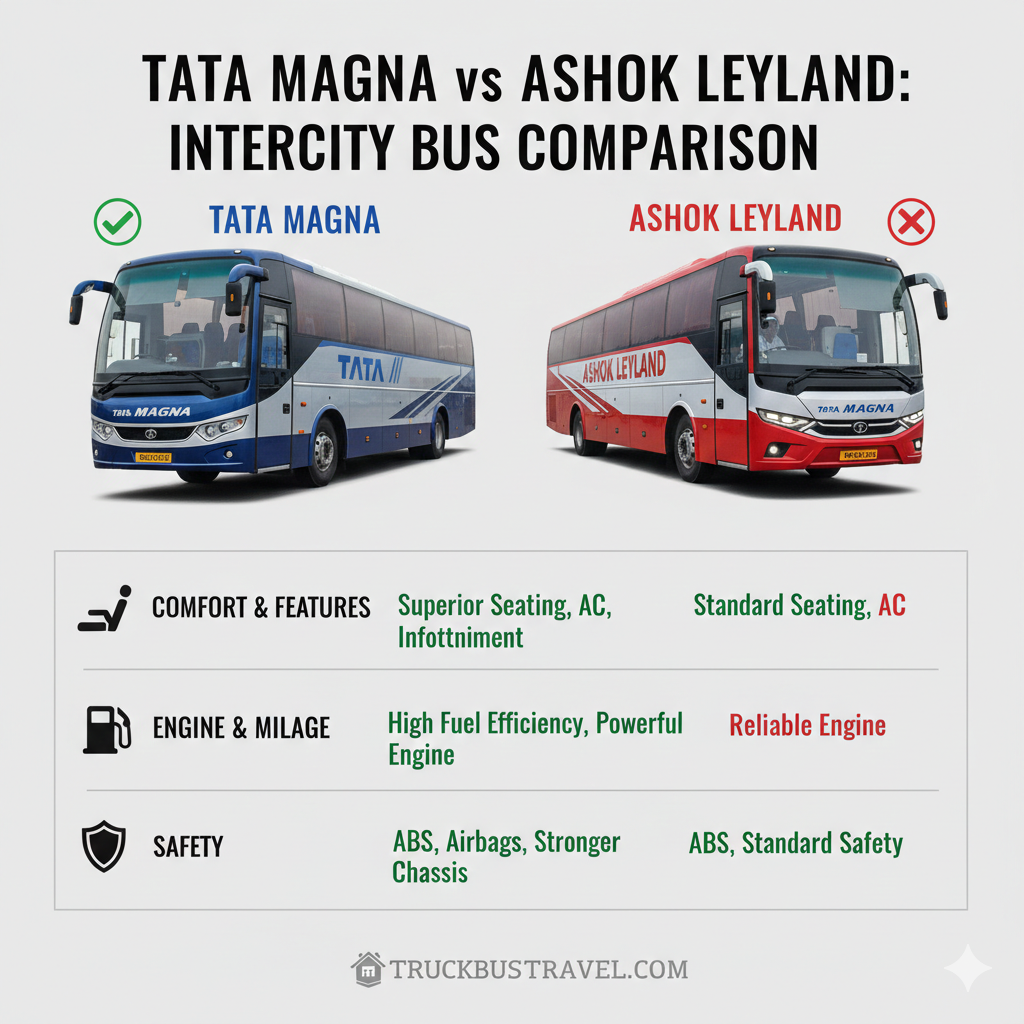
Compared to other sleeper platforms, the Tata Magna Sleeper Bus focuses more on durability and consistency, while some competitors focus only on premium appearance.
That’s why many experienced operators switch to Tata after their first or second fleet upgrade.
FAQs – Tata Magna Sleeper Bus
Q1. Is Tata Magna Sleeper Bus good for long routes?
Yes, it is specifically designed for overnight and long-distance travel.
Q2. What is the life span of Tata Magna Sleeper Bus?
With proper maintenance, 10–12 years is very achievable.
Q3. Is financing easily available?
Yes, Tata buses are highly preferred by banks and NBFCs.
Q4. Is passenger comfort really better?
According to reviews, ride stability and sleep comfort are among the best.
Q5. Is it profitable in 2026 and beyond?
Yes, if operated on the right route with good occupancy management.
Final Verdict: Should You Invest or Not?
The Tata Magna Sleeper Bus is not just a vehicle; it’s a long-term business asset. It may not be the cheapest option upfront, but it often becomes the most profitable over time.
If you want:
Brand trust
Predictable operating cost
Happy passengers
Strong resale value
Then the Tata Magna Sleeper Bus is a wise, future-proof investment.
My honest opinion:
For serious operators who want stability, reputation, and sustainable income, this bus is absolutely worth it.