"Sahi Jaankari, Badi Kamai"
"Sahi Jaankari, Badi Kamai"
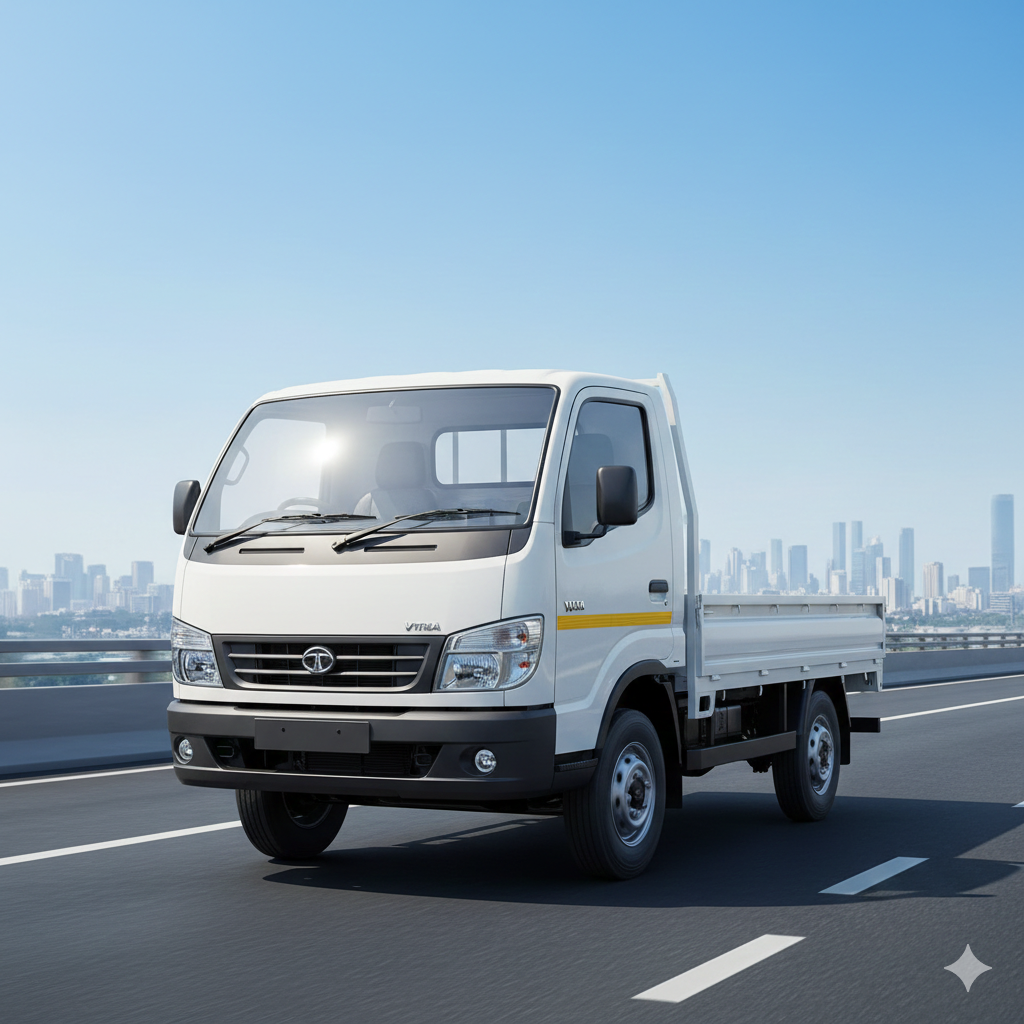
If you are thinking about starting a small transport or delivery business in India, then the Tata Intra V30 is one vehicle you will definitely hear about.
Dealers often promote it as a powerful mini truck with high payload and good mileage. But the real question every transporter asks is simple:
What is the real Tata Intra V30 price on road in 2026 and can it actually make money in real transport work?
In this detailed guide, I will explain the real Tata Intra V30 price on road in 2026, payload capacity, mileage reality, maintenance costs, and the mistakes many first-time buyers make.
This article is written from the perspective of someone who has seen real Indian transport operations on highways, mandis, village roads, and city deliveries.
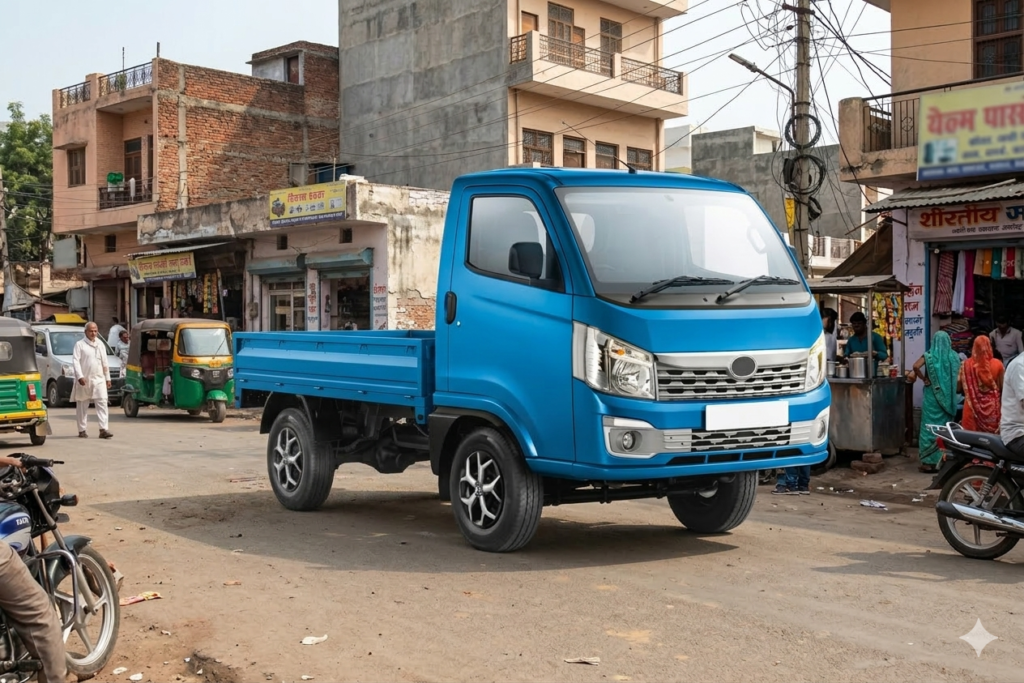
Table of Contents
ToggleMost dealers first tell you the ex-showroom price, but transporters should always calculate the final on-road cost because that is the real investment.
Below is the realistic Tata Intra V30 price on road in 2026.
| Cost Component | Estimated Price (INR) |
|---|---|
| Ex-Showroom Price | ₹8,40,000 – ₹9,00,000 |
| Insurance | ₹35,000 – ₹50,000 |
| Road Tax | ₹50,000 – ₹70,000 |
| Registration & Misc | ₹15,000 – ₹25,000 |
| Body / Cargo Setup | ₹40,000 – ₹70,000 |
| Final Cost | Price |
|---|---|
| Approx On-Road Price | ₹9.8 lakh – ₹10.9 lakh |
So if someone says the pickup costs ₹8 lakh, remember the real Tata Intra V30 price on road in 2026 will be close to ₹10–11 lakh after registration and insurance.
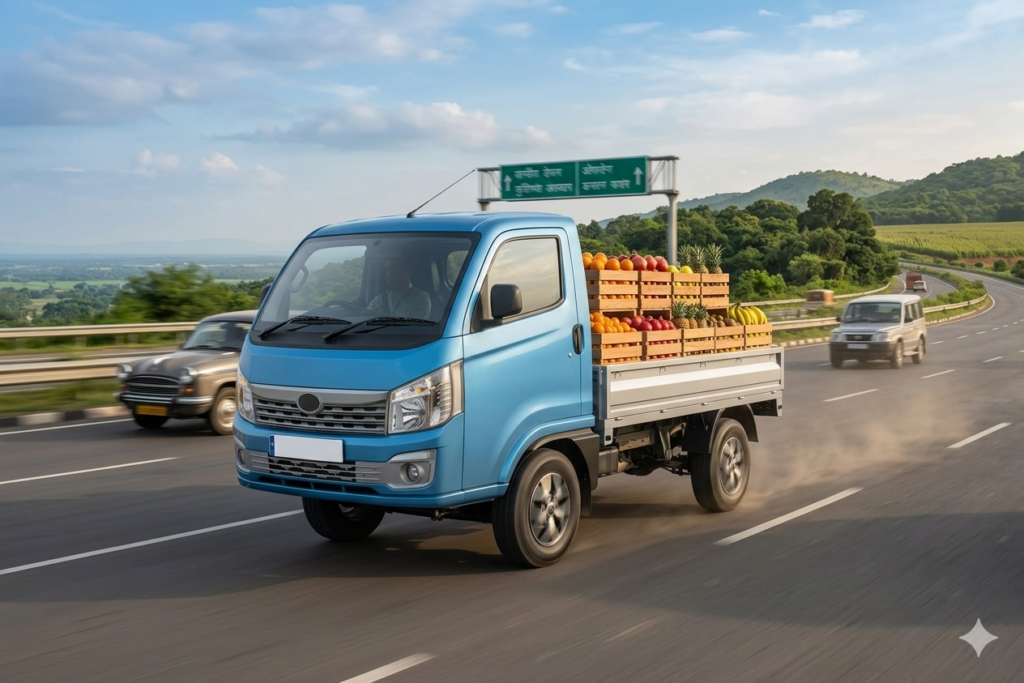
The biggest reason transporters choose the Tata Intra V30 is its payload capacity.
For small business trucks, payload determines how much money you can earn per trip.
| Specification | Details |
|---|---|
| Gross Vehicle Weight | 2565 kg |
| Payload Capacity | 1300 kg (1.3 ton) |
In many mandis and transport routes:
Drivers often carry 1.4–1.5 ton load
Overloading beyond 1.6 ton can damage suspension and clutch
A transporter in Nashik fruit market uses the Tata Intra V30 to transport grapes.
Route example:
Nashik → Mumbai wholesale market
Load:
Plastic fruit crates
Total weight: 1.25 ton
Distance:
165 km
This is exactly the type of work the truck is designed for.
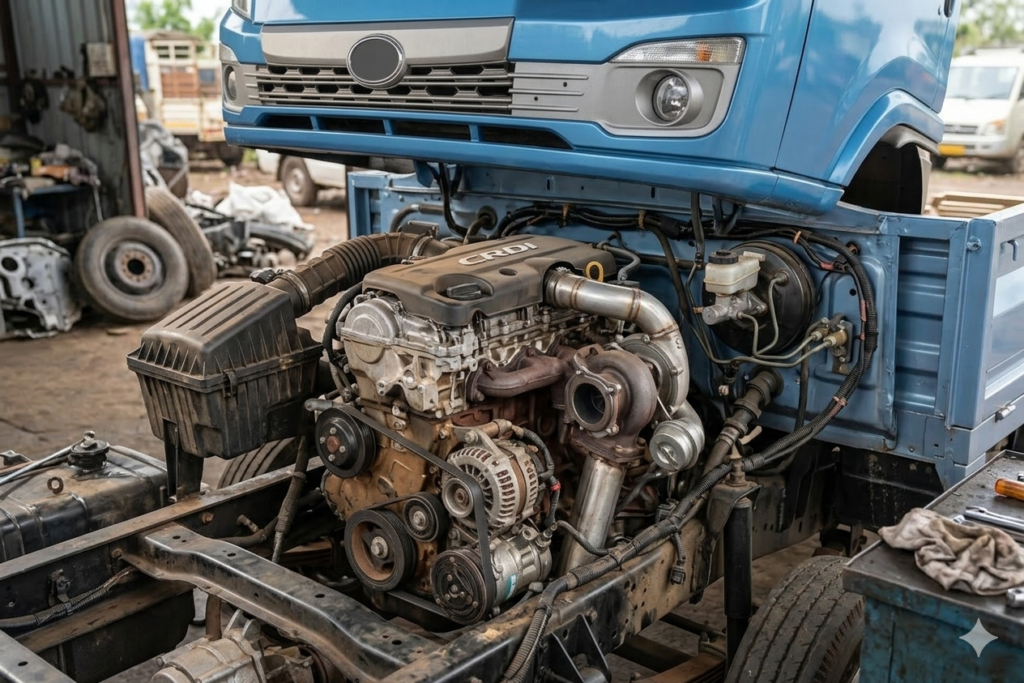
The Tata Intra V30 is known for having one of the most powerful engines in the pickup category.
| Specification | Details |
|---|---|
| Engine | 1.5L DI Diesel |
| Power | 70 HP |
| Torque | 140 Nm |
| Gearbox | 5 Speed Manual |
Drivers usually say:
Good Points
Strong pickup in city traffic
Easy driving in narrow roads
Good torque for loaded driving
Weak Points
Engine noise at high RPM
Power slightly lower on steep hill roads
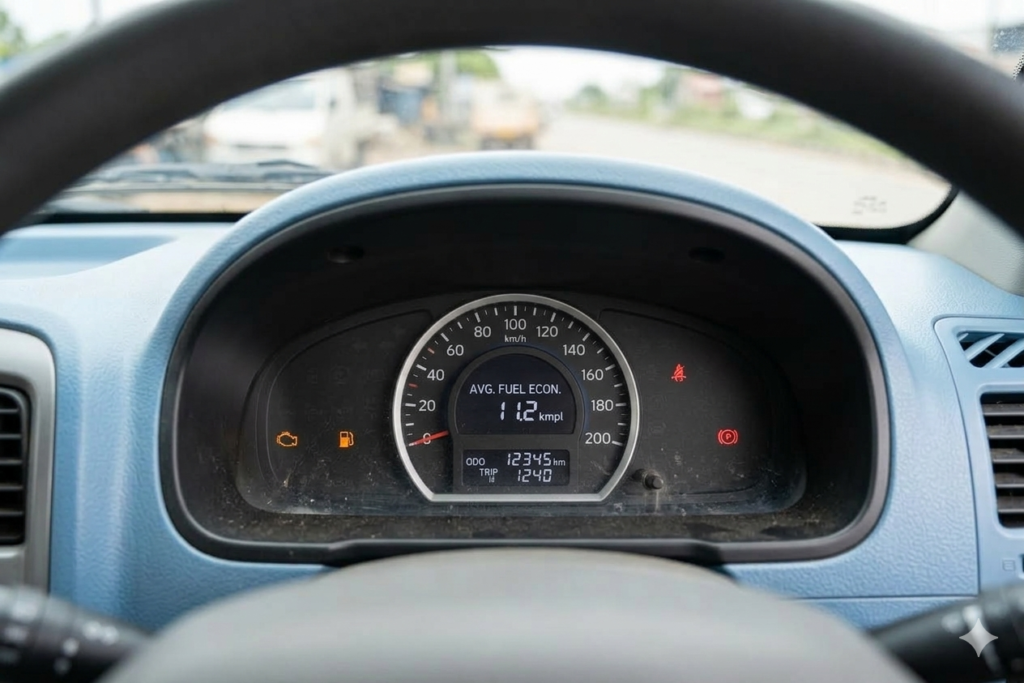
Many dealers claim 17 kmpl mileage, but real conditions are different.
| Driving Condition | Mileage |
|---|---|
| Empty Vehicle | 16 kmpl |
| Normal Load | 13 – 14 kmpl |
| Heavy Load | 11 – 12 kmpl |
| City Traffic | 10 – 11 kmpl |
If diesel price = ₹95 per litre
If mileage = 13 kmpl
Fuel cost per km:
₹95 ÷ 13 = ₹7.3 per km
This is why pickup trucks like the Intra V30 are popular for last-mile delivery businesses.
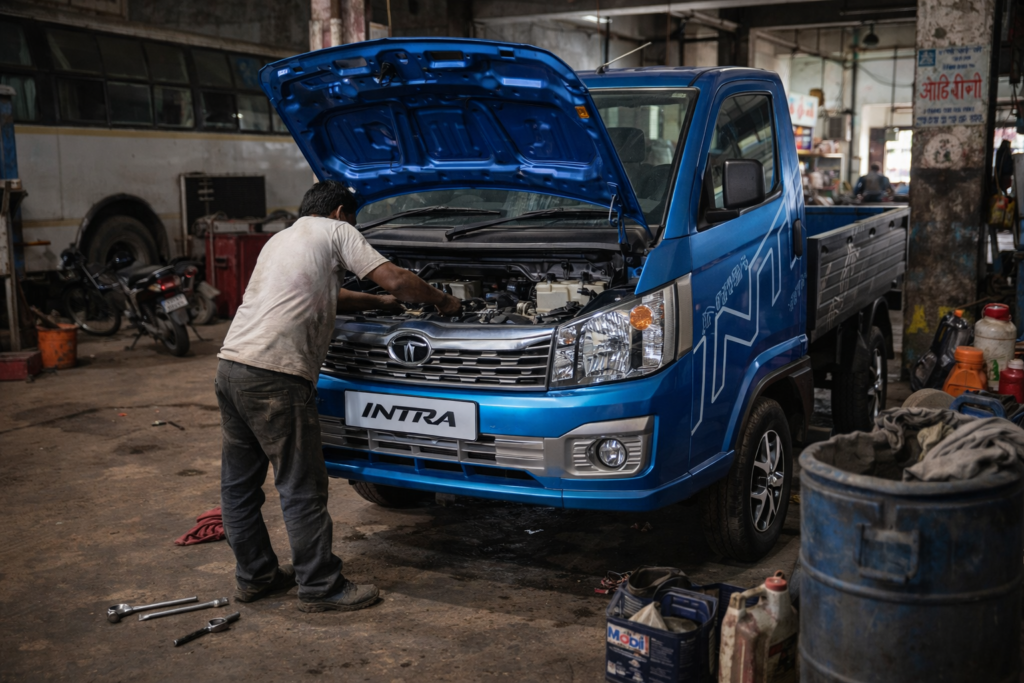
Maintenance is something new buyers often underestimate.
The Tata Intra V30 generally has moderate maintenance costs, but only if you drive carefully.
| Component | Cost |
|---|---|
| Regular Service | ₹4,000 – ₹6,000 |
| Oil Change | ₹3,000 |
| Brake Service | ₹2,500 |
| Tyres Replacement | ₹22,000 (every 60,000 km) |
Average yearly maintenance:
₹25,000 – ₹40,000
But if drivers overload regularly, clutch and suspension repairs increase quickly.
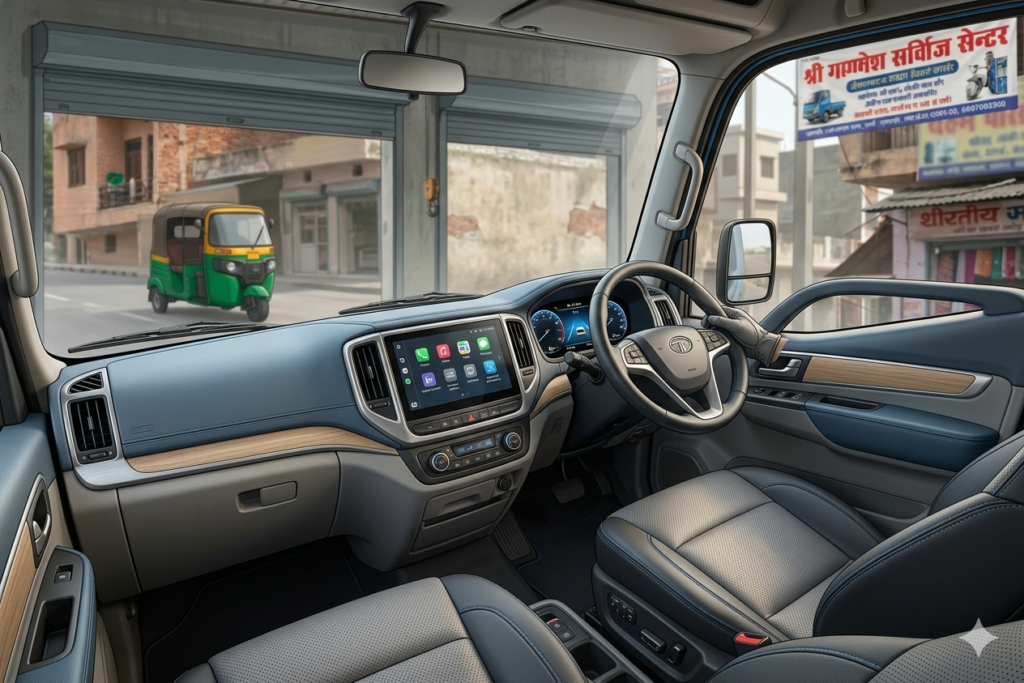
The cabin of the Tata Intra V30 is much better compared to older small trucks.
Driver comfort includes:
Adjustable driver seat
Power steering
Good windshield visibility
Car-like dashboard
For drivers doing 8–10 hours daily delivery work, this comfort makes a big difference.
However, one drawback is that the cabin space is slightly tight for tall drivers.
No truck is perfect. The Tata Intra V30 also has some real issues.
If the truck runs empty, the suspension can feel slightly stiff.
Overloading reduces clutch life quickly.
Rough usage may cause dashboard rattling sounds after a few years.
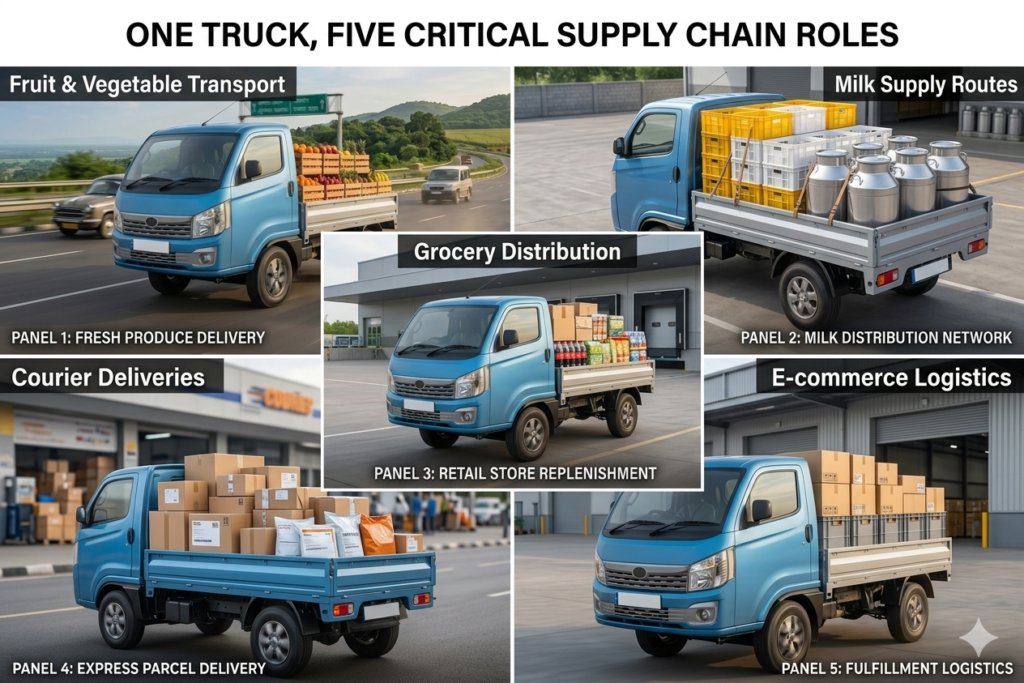
The Tata Intra V30 is ideal for certain transport businesses.
Fruit and vegetable transport
Milk supply routes
Grocery distribution
Courier deliveries
E-commerce logistics
Avoid this truck for:
Sand transport
Brick loading
Construction material
Stone transport
For those applications, a bigger 3-ton truck is better.
Let’s calculate a realistic transport business scenario.
Daily distance:
120 km
Fuel cost per km:
₹7.3
Daily fuel cost:
120 × 7.3 = ₹876
Monthly fuel (26 days):
₹22,776
Driver salary:
₹12,000
Maintenance reserve:
₹3,000
Total monthly cost:
₹37,776
If freight rate = ₹22 per km
Monthly revenue:
120 × 22 × 26 = ₹68,640
Estimated monthly profit:
₹30,000+
For a small pickup truck, this is considered a good stable income business.
The Tata Intra V30 price on road in 2026 is around ₹9.8 lakh to ₹10.9 lakh depending on state taxes and insurance.
The truck has a payload capacity of about 1300 kg (1.3 ton).
Real mileage usually ranges between 11 kmpl and 14 kmpl depending on load.
Yes, it is one of the best pickup trucks for city and last-mile delivery work.
Yes, many first-time transporters start their business with this truck.
No, maintenance cost is relatively low compared to bigger trucks.
Resale value is decent because Tata commercial vehicles have strong market demand.
Yes, the ground clearance is good for rural roads and mandi transport routes.

After understanding the Tata Intra V30 price on road in 2026, payload capacity, mileage and maintenance cost, here is the honest advice.
You run fruit or vegetable transport
Your business involves city deliveries
Your loads are below 1.3 tons
You want low fuel cost operations
Do not buy it if you plan to carry:
Bricks
Sand
Heavy construction material
Those jobs will damage the pickup quickly.
✅ Honest Final Advice
The Tata Intra V30 is one of the most practical small transport vehicles in India.
Used correctly, it can provide stable income, low running cost and easy driving, especially for mandi transport, logistics and delivery work.
But the golden rule of the transport business still applies:
Never overload your truck — profit comes from smart operation, not from abusing the vehicle.